


Imagine stepping into a world where history lessons aren’t confined to dusty textbooks and science experiments don’t require a lab coat. Educational VR apps are doing just that, throwing the doors of perception wide open and inviting learners into immersive worlds where knowledge comes alive. This isn’t just a tech gimmick: it’s a revolution in how we learn. In this text, we’ll explore the revolutionary role of virtual reality in education, the myriad benefits it offers, and the top contenders making waves in the app marketplace. So buckle up: the future of learning is virtual.
The Rise of Virtual Reality in Education
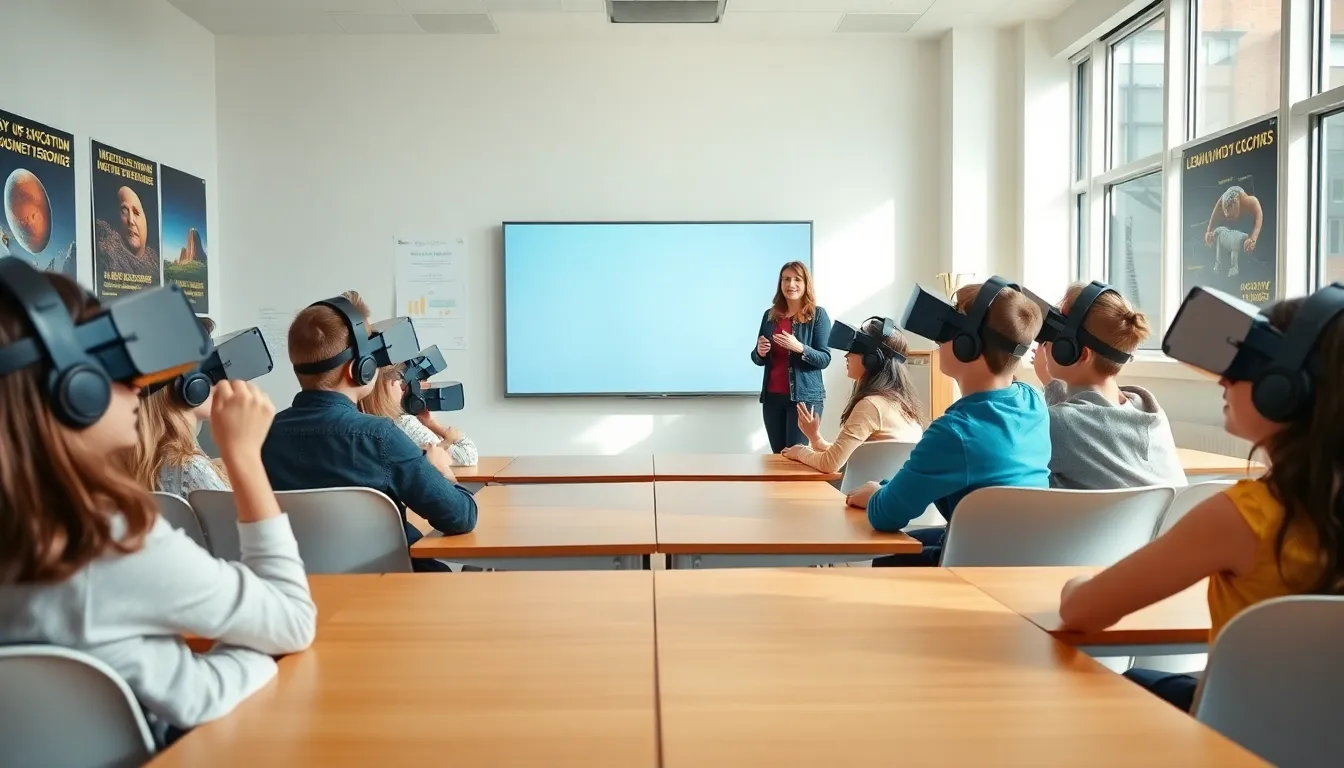
Virtual reality has rapidly evolved from a novelty in the gaming world to a powerful educational tool. With the invention of affordable VR headsets, classrooms now boast an entirely new landscape for teaching and learning. Schools and colleges are increasingly recognizing that traditional methods may not fully engage today’s tech-savvy students. This shift toward VR is not merely a fad: it stems from the neuroscience behind learning. Studies show that immersive experiences dramatically improve retention rates. The thrill of exploring Mars or interacting with ancient civilizations can spark a genuine interest in a subject that mere lectures often fail to inspire. Rather than asking students to memorize facts, VR offerings allow them to experience those facts firsthand, promoting deeper understanding.
Benefits of Using VR in Educational Settings
Using VR in education comes with a treasure trove of benefits. First and foremost, it caters to various learning styles. Visual learners, auditory learners, and kinesthetic learners all find their place in a VR environment. The ability to visualize complex concepts not only aids comprehension but also makes learning more enjoyable. Besides, VR breaks down geographical barriers. A student in a small town can travel to the Louvre just by putting on a headset, no plane tickets required. This access to resources that might otherwise be out of reach democratizes education, making it more equitable. Engaging multiple senses during lessons enhances retention. When students can see, hear, and even manipulate models in real-time, the material sticks. This leads to higher test scores and a more passionate approach to study.
Top Educational VR Apps Available
Ready to immerse? Here are some standout educational VR apps that are changing how knowledge is delivered:
- Google Expeditions: This app allows students to take virtual field trips. From the depths of the ocean to the expanses of outer space, it’s packed with meticulously curated content, bringing lessons to life.
- Nearpod: An interactive classroom tool, Nearpod enables educators to blend VR experiences into their lessons, facilitating real-time feedback and engagement.
- Zspace: By combining VR and AR, Zspace elevates subjects like biology or geometry, allowing students to interact with 3D models, offering insights that books can’t provide.
- Tilt Brush: For creative minds, this application lets students paint in a 3D space. It’s a fantastic way to foster creativity, and students can visualize their work in a way that two-dimensional media simply can’t convey.
- oPhysics: Offering simulations that explore physics concepts, oPhysics introduces students to scenarios they may not have the chance to experience firsthand.
Each app brings its unique flair to the educational landscape, resulting in a rich tapestry of opportunities for learners.
How to Choose the Right VR App for Your Needs
Selecting the right VR app can feel like being a kid in a candy store: the options are overwhelming. Start by evaluating your educational goals. Are you looking to enhance engagement, improve comprehension, or perhaps provide virtual field trips? Consider the age group of your students as well. Some applications are tailored for younger audiences while others cater to adult learners. Compatibility is another key factor. Ensure the VR app aligns with the devices you have available, be it Oculus, HTC Vive, or even mobile-friendly options. Finally, look into trial options or demo versions. Many companies provide free trials. Testing apps before adoption can reveal their efficacy in real classroom settings and help determine what resonates best with your students.
Future Trends in Educational VR Technology
The world of educational VR is not static: it’s evolving at breakneck speed. One major trend is the integration of artificial intelligence. AI-driven VR platforms will soon personalize educational experiences based on individual learning paces and styles. Imagine a tutor tailored to each student that adjusts concepts and materials as they master subjects. Collaborative learning is also on the rise. Virtual environments where students can engage with peers from around the world are becoming more prevalent. This opens new doors for discussions, teamwork, and diverse perspectives that enhance learning environments. As prices for VR technology decrease, accessibility improves. More institutions can incorporate VR into everyday lessons, marking a notable shift in educational delivery. Expect educational VR to become as ubiquitous as smartboards and tablets in classrooms soon.