


In the world of early childhood education, educational building blocks stand out as a fundamental tool for fostering creativity and cognitive development. These versatile toys do more than just entertain; they lay the groundwork for essential skills like problem-solving, spatial awareness, and fine motor coordination. As children stack, balance, and create, they engage in hands-on learning that ignites their imagination.
The appeal of educational building blocks transcends age and ability, making them an invaluable resource in classrooms and homes alike. Parents and educators recognize their potential to enhance learning experiences, encouraging collaboration and communication among young learners. By exploring the various types of building blocks available, one can unlock the myriad benefits these simple yet powerful tools offer to shape the minds of future generations.
Overview of Educational Building Blocks
Educational building blocks serve as essential tools in early childhood education, fostering a myriad of developmental skills. These versatile toys enhance cognitive growth by encouraging creativity, critical thinking, and problem-solving. Through engaging play, children explore concepts such as balance, symmetry, and structural integrity, promoting spatial awareness.
Building blocks cater to various developmental stages, making them suitable for children from infants to preschoolers. Young learners can manipulate these blocks to refine fine motor skills while grasping basic mathematical concepts like counting and shapes. Parents and educators recognize that incorporating building blocks into learning environments cultivates collaborative play, sparking interactions that enhance social skills and teamwork.
The variety of building blocks available—wooden, plastic, or magnetic—offers opportunities for imaginative play. Different designs foster creativity, allowing children to construct anything from simple towers to complex structures. Such diversity in building blocks not only entertains but also nurtures a child’s innate curiosity and desire to experiment.
Incorporating educational building blocks into home and classroom settings enriches the learning experience. Their hands-on nature engages multiple senses, making lessons more memorable and enjoyable. By promoting independent exploration, these building blocks empower children to take initiative in their learning journeys, laying a solid foundation for future academic success.
Types of Educational Building Blocks
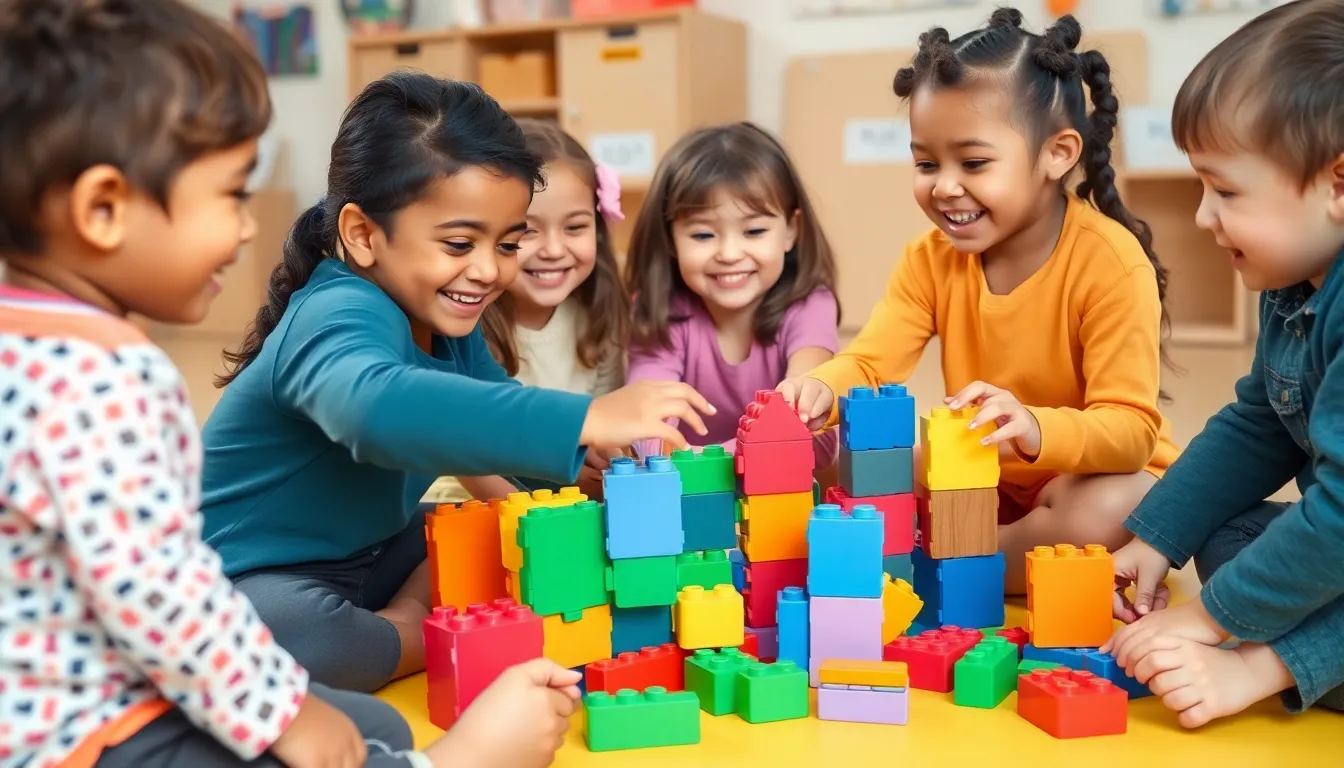
Educational building blocks come in various forms, each offering distinct advantages for child development. Understanding these types helps parents and educators select the most suitable options for enhancing learning experiences.
Traditional Wooden Blocks
Traditional wooden blocks are classic educational tools that promote imaginative play and foundational skills. These blocks typically come in various shapes and sizes, allowing children to build structures and engage in open-ended play. Wooden blocks enhance fine motor skills and spatial awareness, as children manipulate each piece to achieve their design. The sturdy nature of wood provides durability, making these blocks a long-lasting investment for playtime and learning.
Plastic Interlocking Blocks
Plastic interlocking blocks provide versatility and ease of use in educational settings. These blocks often feature various shapes and colors, appealing to children’s visual interests. The interlocking design encourages creative building and improves critical thinking skills as children experiment with different configurations. Plastic blocks are lightweight, washable, and resistant to wear, making them suitable for group activities and indoor play. They also foster collaboration among peers as children share ideas and build together.
Magnetic Building Blocks
Magnetic building blocks introduce unique play experiences, utilizing magnetic forces to create stable structures. These blocks come in various shapes, typically made from durable plastic with embedded magnets. Magnetic blocks stimulate creativity while promoting an understanding of magnetism and balance. Children can easily construct 3D designs, enhancing their problem-solving abilities and spatial reasoning. The engaging nature of magnets encourages experimentation and exploration, essential components of early learning.
Benefits of Using Educational Building Blocks
Educational building blocks provide numerous advantages for child development, enhancing various skills through play. Their multifaceted nature supports cognitive growth, social interaction, and creative expression.
Cognitive Development
Cognitive development benefits significantly from the use of educational building blocks. These toys promote critical thinking and problem-solving skills as children experiment with different structures. Engaging with blocks teaches concepts such as balance, symmetry, and gravity. Studies show that children who play with building blocks demonstrate improved spatial awareness and mathematical understanding, which are essential for later academic success.
Social Skills Enhancement
Social skills enhancement occurs naturally when children engage with educational building blocks in group settings. Playing collaboratively fosters communication and teamwork, as children negotiate ideas and share resources. Sharing blocks encourages turn-taking and patience, fundamental elements of effective social interaction. In group play, children learn to respect diverse viewpoints and problem-solve collectively, building strong interpersonal skills.
Creativity and Imagination
Creativity and imagination flourish through the use of educational building blocks. Children explore limitless possibilities as they design and construct their own creations. This open-ended play inspires innovative thinking, allowing children to express their ideas without constraints. Building blocks encourage experimentation, giving children the freedom to reimagine and recreate, enhancing their imaginative capabilities. Such experiences form a critical aspect of their emotional and artistic development.
Choosing the Right Building Blocks for Kids
Selecting suitable building blocks for kids involves considering age appropriateness, safety, and educational value. These factors ensure an optimal play and learning experience.
Age Appropriateness
Age-appropriate building blocks cater specifically to the developmental stages of children.
- Infants and toddlers benefit from soft, lightweight blocks that promote grasping and stacking. These blocks help develop basic motor skills and encourage exploration.
- Preschoolers thrive with larger interlocking blocks, which support imaginative play and more complex structures, enhancing problem-solving and creativity.
- For school-age children, smaller components offer increased variety and challenge, fostering critical thinking and engineering skills as they construct intricate designs.
Safety Considerations
Safety remains crucial when choosing building blocks.
- Non-toxic materials ensure a safe play environment, preventing exposure to harmful substances.
- Rounded edges prevent injuries, especially for younger children who are prone to putting items in their mouths.
- Check for age recommendations on packaging, ensuring blocks do not pose choking hazards for small children.
Educational Value
Building blocks provide significant educational value across multiple domains.
- Cognitive growth occurs as children engage in problem-solving and spatial reasoning while constructing various shapes and structures.
- Social skills flourish during cooperative play, where communication and teamwork cultivate respect and collaboration among peers.
- Creativity and imagination find expression as children build and redesign their creations, enhancing their ability to think outside the box.
Integrating these considerations leads to informed choices, maximizing the benefits that educational building blocks offer to children’s development.
How to Incorporate Building Blocks in Learning
Incorporating building blocks into learning environments enhances educational experiences. Structured play activities and open-ended exploration facilitate various developmental skills.
Structured Play Activities
Structured play activities offer a framework for intentional learning with building blocks. Activities can include specific challenges where children construct items based on instructions, such as bridges or towers. Educators can set goals for height, stability, or symmetry, engaging students in problem-solving. These activities promote teamwork as children collaborate toward a common objective. Additionally, structured play supports the development of critical thinking by encouraging children to evaluate their designs and make adjustments based on trial and error. Teachers can utilize these activities to introduce concepts like balance and gravity in a tangible way.
Open-Ended Exploration
Open-ended exploration fosters creativity and independence in children when using building blocks. By allowing children the freedom to create without restrictions, they can imagine and construct their designs. This play style encourages experimentation, helping children understand spatial relationships and geometric principles through hands-on experiences. Adults can enhance the exploration by asking open-ended questions, prompting children to articulate their thought processes and decisions. This reflective practice supports language development and enhances communication skills. Open-ended exploration empowers children to pursue curiosity, thereby linking imaginative play to cognitive growth.
Educational building blocks are invaluable tools in early childhood development. They not only spark creativity but also enhance critical skills like problem-solving and spatial awareness. These versatile toys adapt to various learning styles and developmental stages, making them suitable for all children.
By incorporating building blocks into playtime, parents and educators can create enriching environments that promote collaboration and social skills. The right choice of blocks can significantly impact a child’s learning journey, ensuring safety and educational value. Ultimately, educational building blocks lay the groundwork for future academic success while nurturing a child’s imagination and curiosity.