


Imagine a tiny human, wise beyond their two years, soaking up knowledge like a sponge, all thanks to the magic of educational apps. It sounds like something out of a sci-fi movie, right? But in today’s tech-savvy world, parents are turning tablets into little portals of knowledge for their toddlers. These apps pack a punch in cognitive development, linguistic skills, and even critical thinking. Sure, they may not replace good old-fashioned playtime, but they sure can make the learning process more engaging. Let’s jump into how these educational tools can help little ones thrive while keeping the fun alive.
Benefits Of Educational Apps
Cognitive Development
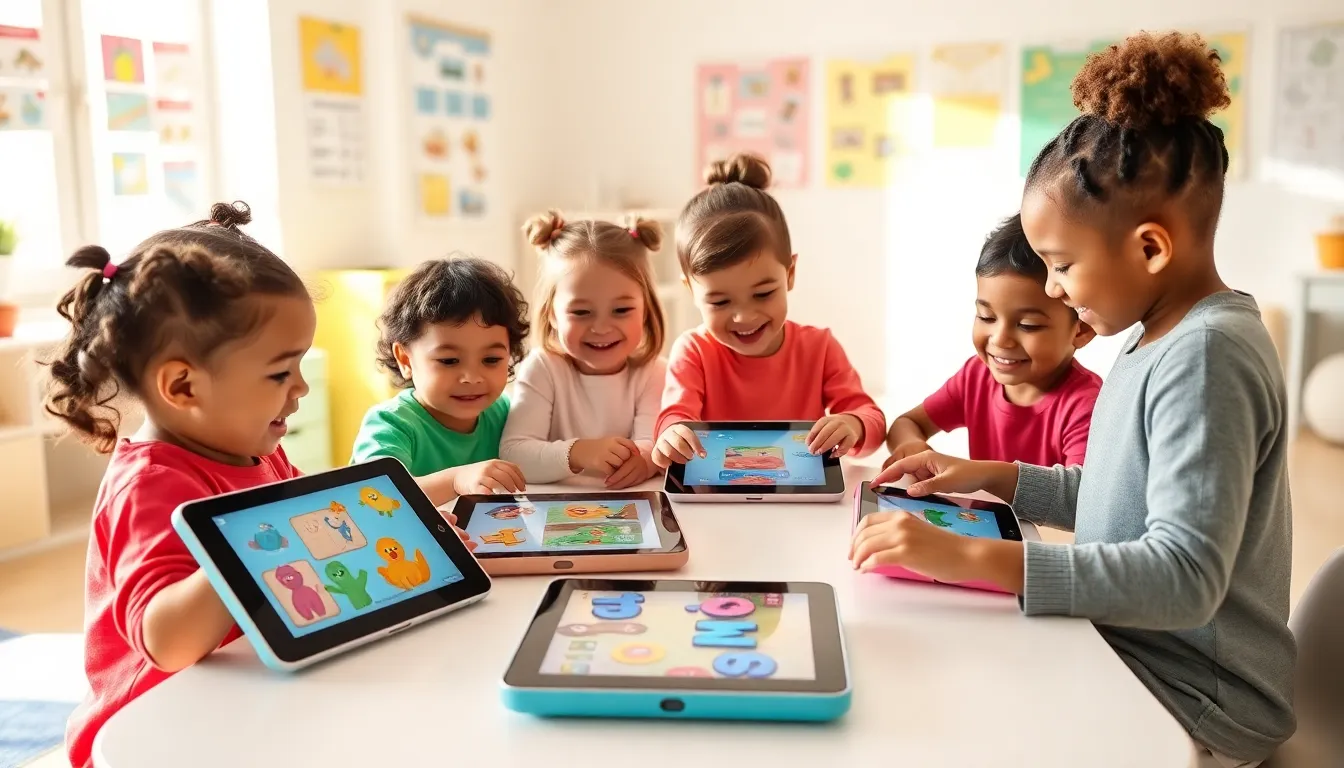
Educational apps are designed with cognitive growth in mind. They often present challenges that require little ones to express their thoughts and follow sequences. As they navigate through colorful interfaces, they solve puzzles and engage in activities that sharpen memory and attention skills. This cognitive stimulation is critical during the early years when brain development is at its peak.
Language Skills Enhancement
Imagine a world where your toddler’s vocabulary expands not through rote memorization but through engaging interactions. Educational apps often incorporate interactive storytelling and vocabulary-building games, facilitating language acquisition in a fun way. By listening to words and sentences in combination with vibrant visuals, children learn to recognize letters, sounds, and soon, the joy of conversing.
Problem Solving And Critical Thinking
Toddlers love to explore, and educational apps channel this curiosity by presenting them with age-appropriate challenges. As children manipulate shapes, identify colors, and engage in other tasks, they’re not just playing, they’re honing their problem-solving abilities. This proactive approach encourages them to think critically, fostering a lifelong love for learning.
Key Features To Look For In Educational Apps
Age Appropriateness
Not all apps are created equal, especially when it comes to age suitability. Parents should prioritize apps specifically designed for their child’s developmental stage. An appropriate app balances fun and learning and caters to a toddler’s limited attention span while being challenging enough to keep them engaged.
Interactivity And Engagement
The best educational apps for two-year-olds are highly interactive. Look for apps that encourage touch, drag, and drop movements. Features like engaging animations, sounds, and feedback not only captivate toddlers but also reinforce learning concepts, turning educational experiences into exciting adventures.
Parental Controls And Monitoring
Navigating the digital world can be tricky. Apps that provide parental controls allow moms and dads to monitor their child’s activity, ensuring safety while offering insights into what content captivates their little one. They can track progress and set usage limits, making screen time productive rather than passive.
Top Educational Apps For 2 Year Olds
App Recommendation 1: Overview And Features
Endless Alphabet – This app is fantastic for budding vocabulary. It introduces children to new words through adorable animations and engaging word puzzles. Kids love learning phonics while exploring playful characters, making it a solid choice for curious minds.
App Recommendation 2: Overview And Features
ABCmouse – A comprehensive learning platform, ABCmouse offers tons of interactive games perfect for toddlers. The app covers basics in math, art, and more through engaging activities. Parents appreciate its structured curriculum that seamlessly integrates learning into play.
App Recommendation 3: Overview And Features
Sago Mini Friends – This app invites toddlers into a vibrant world filled with friendly characters and imaginative scenarios. Kids explore social skills and emotional intelligence through play, helping them understand relationships while having tons of fun.
Best Practices For Using Educational Apps
Setting Screen Time Limits
Even the most enriching content requires moderation. Setting clear screen time limits is crucial to balancing digital learning with other activities. Parents can use app timers or incorporate app usage into daily routines so that little learners don’t become overly reliant on screens.
Encouraging Parent-Child Interaction
Apps can serve as more than just a solitary activity. Engaging with the child during app usage can enhance learning experiences. Parents should ask questions, encourage discussion, and even play along. This interaction boosts the child’s understanding of concepts while forging a stronger bond between parent and child.
Monitoring Progress And Engagement
Regularly checking in on what apps are holding a toddler’s attention is essential. Parents may want to observe which activities spark the most joy or learning moments. This monitoring will not only provide insights into their child’s interests but also ensure they are on the right path to reaching developmental milestones.